Fleas
Fleas
Facts About North Texas Fleas
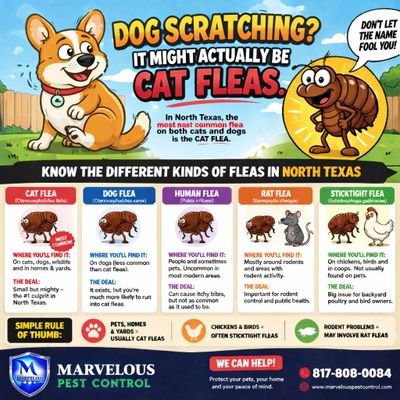
1. The cat flea is the main problem flea in Texas.
Even when fleas are found on dogs, they are usually cat fleas, not dog fleas. Cat fleas feed on cats, dogs, wildlife, and sometimes people.
2. Fleas do not need to live on people to bite people.
In homes, fleas usually need an animal host such as a dog, cat, raccoon, opossum, rodent, or feral cat to reproduce. Human bites often happen on the ankles and lower legs.
3. North Texas flea pressure often builds in shady, protected areas.
Hot, sunny, dry areas are harder on fleas. The bigger problem areas are usually under decks, shaded patios, crawl-space openings, dog resting areas, under shrubs, and wildlife trails.
4. Fleas have four life stages.
They go through egg, larva, pupa, and adult stages. The adult fleas are only part of the problem. Eggs and larvae are often in pet bedding, carpets, shaded soil, and protected resting areas.
5. Vacuuming matters more than people think.
Vacuuming helps remove flea eggs, larvae, adults, and flea dirt. Texas A&M recommends focusing on areas where pets spend time, under furniture, cushions, beds, and wall edges. Vacuum bags or debris should be discarded during an active infestation.
6. Wildlife can keep fleas coming back.
In North Texas, fleas can be tied to feral cats, opossums, raccoons, rodents, skunks, and stray dogs. Treating the house without addressing animal activity outside can lead to repeat problems.
7. Flea pupae are the “comeback” stage.
Fleas inside cocoons can be harder to kill. After treatment, people may still see fleas emerge for a while as pupae hatch out. That does not always mean the treatment failed.
8. Fleas can cause more than itching.
They can trigger flea allergy dermatitis, contribute to anemia in heavy infestations, and can be involved with tapeworm transmission in pets. Texas A&M also notes fleas among biting pests that may transmit disease pathogens such as murine typhus.
9. Pets usually need veterinarian-approved protection.
For serious or repeated flea problems, the pet needs to be treated with an effective flea product. Texas A&M recommends heavier or chronic infestations be handled with veterinarian guidance.
10. Flea control works best as a system.
The best results usually come from combining:
pet treatment + indoor vacuuming + washing pet bedding + exterior treatment of shaded resting areas + wildlife/rodent exclusion.
What to Expect After a Flea Treatment